
Join the South Texas Section for our monthly dinner meeting. This event is on Becoming an Expert Witness. We will also have a workshop on Designing Metal-Organic Frameworks (MOFs) for Energy and Environmental Technologies. This event will be in-person only with no virtual web casting option available.
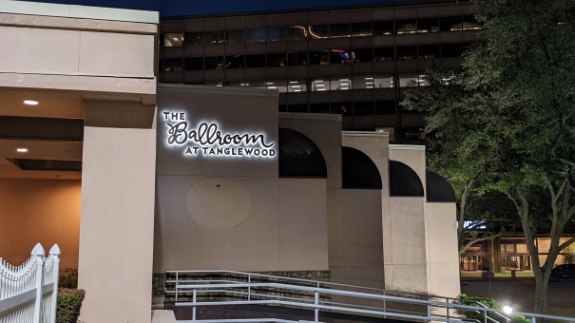
The event will be held at The Ballroom at Tanglewood (the old HESS building) located at 5430 Westheimer Way, Houston, TX 77056 in the San Jacinto Room. The parking is free.
Agenda
- 5:00 pm -6:00 pm Workshop - Designing Metal-Organic Frameworks (MOFs) for Energy and Environmental Technologies
- 6:00 pm - 7:00 pm Dinner
- 7:00 pm - 7:30 pm Announcements
- 7:30 pm - 8:30 pm Keynote Presentation - The Engineer as an Expert Witness in Litigation
Dinner Registration
Workshop (1 PDH by STS)
Topic
From Structure to Function: Designing Metal-Organic Frameworks (MOFs) for Energy and Environmental Technologies
Abstract
Metal-organic frameworks (MOFs) offer an exceptional platform for translating precise structural design into targeted functionality, enabling solutions to some of today’s most pressing energy and environmental challenges. Their modular architectures, permanent porosity, and highly tunable chemical and electronic properties allow MOFs to be purpose-built for specific applications rather than adapted from existing materials. This presentation will highlight design strategies that link MOF structure to function across a range of technologies, including light-driven catalysis, energy storage, gas separation, and water remediation. Emphasis will be placed on how rational control of pore environments, framework chemistry, and optoelectronic properties can enhance performance, efficiency, and sustainability. Together, these examples illustrate how task-specific MOF design can accelerate the development of next-generation energy and environmental technologies.
Note: The Nobel Prize in Chemistry for 2025 was awarded to three researchers “for the development of metal–organic frameworks.”
About the Speaker
Dr. Stavroula (Alina) Kampouri joined Rice University in 2024 as an Assistant Professor in the Department of Chemical & Biomolecular Engineering, with a joint appointment in Chemistry. She earned her B.S. in Environmental & Chemical Engineering from the Technical University of Crete (TUC) in 2015 and completed her Ph.D. in Chemistry & Chemical Engineering at the Swiss Federal Institute of Technology Lausanne (EPFL) in 2020 in Prof. Berend Smit's research group. Her doctoral research focused on optimizing photocatalytic systems based on MOFs for hydrogen production and water remediation. She then conducted postdoctoral research with Professor Mircea Dincă at MIT, designing new conductive MOFs for energy applications. At Rice, her group develops porous functional materials and nanoconfined systems for next-generation energy and semiconductor technologies.
Keynote Presentation (1 PDH by STS)
Topic
The Engineer as an Expert Witness in Litigation
Abstract
In the complex world of litigation, engineers may often be called upon to serve as expert witnesses, offering technical insights that can clarify complicated issues for judges and juries in language the lay person can understand. Their specialized knowledge allows them to analyze evidence, interpret data, and provide fact-based opinions on complex issues.
An engineer acting as an expert witness plays a dual role. First, they must conduct a thorough investigation into the matter in dispute. Second, they must communicate their findings clearly and persuasively in both written reports and often in oral deposition and/or testimony. In such cases, objectivity is essential. Courts rely on experts to provide unbiased, scientifically valid opinions, even when hired by one party in a case. The weight given to their testimony often depends on their integrity and adherence to sound engineering principles and standards.
Engineers are often called to testify in many different types of cases, including, but not limited to, construction disputes, industrial accidents, patent disputes, property tax disputes, environmental damage, and product liability claims. Their testimony can help influence settlements, guide court decisions, and establish precedent. Engineers who serve as expert witnesses must be meticulous, articulate, and ethical. The role of expert witnesses in litigation has become ever more vital in delivering fair and just outcomes.
About the Speaker
John O'Brien co-founded the energy consulting firm, Baker & O'Brien, Inc., in partnership with Kenneth Baker, in 1993. John earned two degrees from MIT in Chemical Engineering before joining Caltex Petroleum Corporation after graduation. John’s experience in the energy industry spanned more than 50 years. His career has included extensive involvement on international oil and ga projects in Australia and Asia-Pacific, where he was Energy Director for the consulting firm Arthur D. Little based in Singapore. He often worked closely with the financial community in providing transactional due diligence services. Later in his career, he was frequently called upon to offer expert opinion and testimony in energy-related disputes, arbitrations, and litigation, having testified in Federal, State, and international judicial settings, as well as hearings before the Federal Energy Regulatory Commission (FERC). John also previously served the Board of Directors for several publicly traded, energy-related companies, including a large refinery services firm in Houston and an oil recycling company based in Florida.
- Log in to post comments