
Sections
Utilizing the science-fiction-like properties of quantum mechanics, quantum computing can solve highly complex problems that are unsolvable by traditional computers.
Chemical engineers are rigorously trained in problem solving and, in recent decades, computing is often a critical tool for finding solutions. When tough computational issues arise, our efforts can be constrained by several factors, such as operational costs, supply chain schedules, power usage, and hardware demand.
But what if the constraint was time? Not measured in months or Gantt charts, but time scales exceeding the span of entire human civilizations? That is where quantum computers come in — computers that use the weird properties of quantum mechanics to outpace and outsolve the most advanced supercomputers available.
A McKinsey study published in June 2025 (1) suggests that the revenues for quantum computing will grow from $4 billion in 2024 to $72 billion by 2035. Early experiments foundational to quantum computing were awarded the Nobel Prize in 2025. Despite the recent hype, building quantum computers and getting them to stay well-behaved in the real world is difficult.
The story of quantum computing is as much about human curiosity as it is about technology. To appreciate where we’re headed, we must first understand how it all began. Our understanding of quantum computers has humble origins: it begins with a light bulb.
A century of quantum mechanics
In the 1890s, a German musician whose world-class piano playing skills had him pondering a career as a professional pianist, would give in to his other calling: physics.
A German national standards bureau had contracted the physicist to investigate the relationship between power and performance in light bulbs (2). It was understood that gains in efficiency could be scaled across the entire country’s manufacturing operations.
While physicists had known that there was a correlation between the wavelengths of light, energy, and visible color, the expectation was that the relationship would be described by a nice, continuous curve. The higher the energy, the shorter the wavelength. Easy peasy.
But at the atomic level, that is exactly not what the physicist found.
He observed that at fixed thresholds, the energy did not smoothly transition from one energy level to the next at all. Instead, it appeared as if “packets” of energy magically leapt between energy levels, with nothing in between. These packets of energy would come to be known as “quanta.” This discovery would lead to a Nobel Prize in Physics in 1918 for our pianist-physicist. His name was Max Planck.
More than a hundred years later, the United Nations (UN) would declare 2025 as the International Year of Quantum Science and Technology (3), celebrating a century of quantum mechanics. Compared to the everyday world we observe around us, or the “classical” world, the quantum world is downright weird with science-fiction-like behaviors.
Bits, qubits, and entanglement
Classical physics is the physics of things in our everyday world, from Isaac Newton’s falling apples to Lewis Hamilton accelerating his Ferrari around hairpin turns in Monte Carlo during the F1 Grand Prix. Classical computing is everything we’d commonly consider a computer today: self-checkout lanes at the grocery store, running a process simulation in Aspen, or streaming YouTube on your Google Pixel or iPhone. All of these examples of computing rely on bits, which can only exist as a zero or a one and nothing else.
But in the quantum world, at the scale of particles like atoms and photons, things get a little strange.
A quantum bit, or “qubit,” due to a weird property called superposition, can be both a one and a zero at the same time. To visualize superposition, consider a maze; a classical computer approaches its solution by traversing each path individually until it finds the correct solution. For a quantum computer, it can explore all paths at the same time and upon measurement, it will tell you the path that has the highest probability of being the right one.
The other property of quantum mechanics that allows quantum computing to take on fantastical abilities is called entanglement. Entanglement is the ability of two particles to be so intertwined that by observing the information about one of them, you immediately know the properties of its counterpart, even if those particles are on opposite ends of the universe.
But before you start slipping into your Starfleet Academy uniform, the point of entanglement is to remove the necessity of locating that otherworldly particle to understand its characteristics. No warp speed or wormholes needed. Just check out the entangled particle that’s right here to know its corresponding properties way out there.
It’s not about speed; it’s about overcoming the impossible
American physicist and Nobel Laureate Richard Feynman is known to have said, “If you’re not confused by quantum mechanics, then you don’t understand quantum mechanics.”
So, we have qubits, superposition, and entanglement. Combined, these elements bring us to the heart of what makes a quantum computer.
In a 2024 article in Nature (4), Google published that its Willow quantum processor outpaced one of the world’s fastest supercomputers in a benchmarking test. These kinds of tests, which are meant to illustrate compute power more than demonstrate real-world use cases, pit different computers against the same complex mathematical problem.
The world’s fastest supercomputer as of this writing is El Capitan in Livermore, CA, just outside of San Francisco. Supercomputer processing speeds today clock in at around 1,500 petaFLOPS (floating point operations per second, or “FLOPS” for short), or 1,500 million billion calculations per second. (For comparison, a chemical engineer doing simple arithmetic like 2+2=4 takes about one FLOPS worth of time.)
To solve the benchmarking problem set out by Google, a supercomputer at these petaFLOPS speeds was projected to require ten septillion years (1 followed by 25 zeros) to finish the calculation. That’s a lot of time to do a math problem (undergrad me doesn’t feel so bad all of a sudden).
Solving this same benchmarking puzzle on the Willow quantum processor takes just five minutes.
More importantly, though, quantum computers are not just about speed. They’re about something much more profound.
Quantum computing solves unsolvable things
In a 2025 report from Hyperion Research (5), investments of $8 billion are projected for quantum computing in 2026. The top use case of interest is the chemicals sector, outranking financial services, oil and gas, and defense.
One of the simplest molecules, water, has two hydrogen atoms, one oxygen atom, and ten electrons, all in constant motion at the quantum mechanical level. To understand every interaction at every possible energy level across all ten electrons, classical limitations run into a wall pretty quickly. Researchers at Emory Univ. in 2022 (6) used a classical machine learning model to take the initial steps to understanding water at the quantum level. In 2024, IBM used a quantum processor to calculate the true ground state energy of water, something unattainable by purely classical methods (7).
As we look at molecules even slightly larger than water, classical computers are simply not able to shoulder those calculations. If these capabilities can be proven for simple molecules like water, then calculating and characterizing every energy state of much more complex molecules like iron-molybdenum cofactor (FeMoco) — used in the catalysis of nitrogen fixation in the energy-intensive fertilizer industry — becomes computationally reachable. A better understanding of catalysts would make significant inroads to improving the energy efficiency of current industrial processes, where ammonia production results in ~450 million m.t. of CO2 emissions per year (8).
Quantum computers will be a path to understanding molecular behavior dynamically at the chemical and biochemical scale, opening the gate to entirely new problem sets that would otherwise be unreachable by any classical computer. Ever.
So, if quantum computers are so amazing at chemistry, then why aren’t we already building warehouses full of them by now? Well, it’s messy. Or more specifically, it’s noisy.
Reality is noisy
Built in 1914, Maryland Hall is home to the Johns Hopkins Univ. Dept. of Chemical and Biomolecular Engineering. Every undergraduate chemical engineer’s rite of passage here is a literal one: stepping into Senior Lab.
As an undergraduate chemical engineering student, I remember following my classmates down Maryland Hall’s dim stairwells into the basement, through wooden doors with wilting glass panes as old as the building itself. If the first three and a half years as a chemical engineering student weren’t enough to make one doubt their technical abilities, here was a room filled with intimidating machinery for one final question: You think you know things, but what can you do with what you know?
Inside the room were pilot versions of chemical engineering equipment that a “real” chemical engineer would encounter in the field: distillation columns, gas absorbers filled with what looked like dried pasta, process controls equipment, pressure relief valves the size of fire hydrants, etc.
Our professors would leave us alone in our project teams with this bone-chilling declaration, “You have one week to figure out what this equipment does. See you then.” Over the course of days, we’d document, draw, measure, and experiment our way from theory into reality, constantly walking that blurred line between knowing something and knowing absolutely nothing.
The quantum technology world is very much in its Maryland Hall phase of evolution. We have the fundamentals of quantum physics, we have quantum algorithms and some software, we have the beginnings of quantum hardware. We can sketch out concepts, but we are still trying to figure out how to connect all the dots, extracting meaning and understanding along the way. All of these areas have to converge to tackle quantum’s biggest challenge: reality.
When flipping on the light switch in Senior Lab, any of the pieces of unit operations equipment in Maryland Hall would be exposed to the light emitted from the fluorescent bulbs in the ceiling. Aside from lighting up the room, the light was just that: physical illumination. But at the quantum scale, those same photons from the ceiling are enough to entirely throw off your data.
All this translates into the delicate, ephemeral nature of quantum measurement. The majority of what you measure will be noise from the real world around you: vibrations, stray light, errant electrons. In the classical world, such noises are a nuisance at most, if they are noticed at all. But at the quantum scale, that noise is enough to throw off what you’re trying to measure. It’s the signal-to-noise ratio problem, but the noise is monstrously vast and the signal is nowhere to be seen.
To address these struggles, an entire sub-discipline of quantum technologies exists: quantum error correction and quantum error mitigation. Without these error-handling techniques, all the insights emerging from quantum computing can’t be fully interpreted or understood.
Nordic summers, quantum futures, and beer
It’s summer in Copenhagen, and the noise of applause is resonant and uplifting. It’s the last day of QChemE 2025, the AIChE co-sponsored workshop on quantum computing applications in chemical and biochemical engineering (9). During the conference, graciously hosted by the Technical Univ. of Denmark (DTU) in the suburb of Lyngby, my conference co-chairs and I heard from venture capitalists, quantum startups, academics, research foundations, and intellectual property lawyers, all of whom had come together to discuss the potential of quantum in the chemical sciences.
Denmark was a fitting scene for these discussions on the future of quantum technologies, not in the least because of the workshop’s short distance away from the Niels Bohr Institute, practically the birthplace of quantum mechanics. The country’s long history of investing in emerging technologies made it a ready home for its thriving quantum ecosystem of the present day.
Just twelve miles away from DTU is a 180-year-old brewery whose contributions to both beer and chemistry point to an inspiring roadmap ahead for quantum technologies. In the early 1800s, beer that wouldn’t make you sick due to impurities or bacteria was not a given. A second-generation brewer named J.C. Jacobsen knew that beer brewing processes had to be deliberately designed to meet high quality standards and that the principles of science were the key enablers to such designs.
As demand grew, Jacobsen founded a new brewery in 1847 and named it after his then five-year-old son, Carl (10). The company’s research brought standardized manufacturing processes to brewing, turned beer-making into a science, and in the process, invented the pH scale (11), which the company gave freely to the world (open sourcing before open sourcing was cool) (Figure 1). Today, the Carlsberg Brewery and its associated Carlsberg Foundation and New Carlsberg Foundation, have become major supporters of technology and the arts and continue to fund advancements in scientific research. In the quantum world, Denmark’s Novo Nordisk Foundation, the world’s largest public philanthropy with assets upward of $114 billion (12), has been a key supporter of quantum technologies (13).
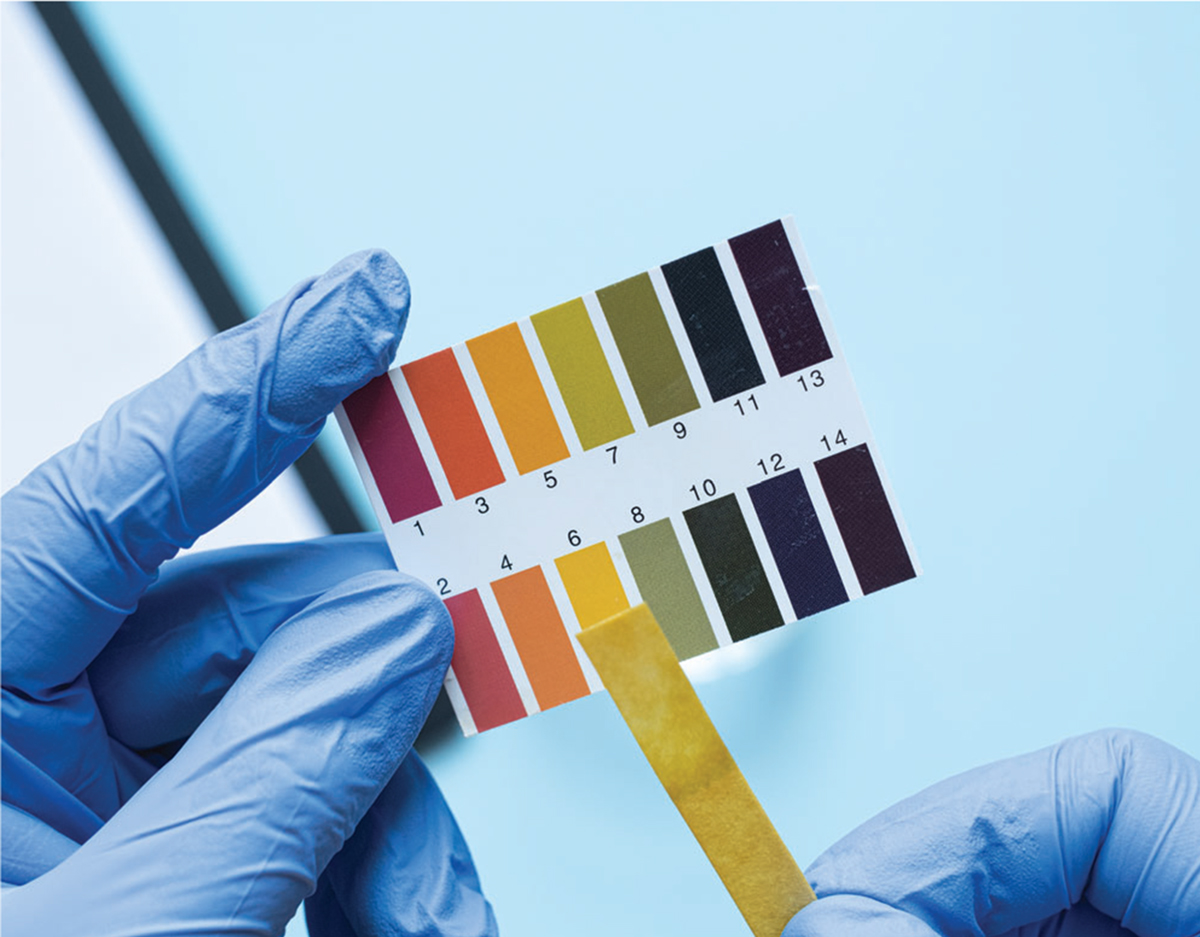
▲Figure 1. Modern pH test kits are based on technology developed over 100 years ago in Denmark, which helped standardize beer-making.
The “pH moment” for quantum technologies hasn’t yet emerged, but when you have application-centric funding combined with the interdisciplinary efforts of basic physics, technology upstarts, and the promise of quantum’s impact on the chemical sciences, entirely new areas of research can be explored, from medicine and pharma to materials discovery and chemical simulations, enabling quantum-equipped chemical engineers to do what we do best: solving complex problems.
From scientific aspiration to experimental reality
In October 2025, the Nobel Prize in Physics was awarded to John Clarke, Michel H. Devoret, and John M. Martinis “for the discovery of macroscopic quantum mechanical tunnelling and energy quantisation in an electric circuit” (14). This “quantum tunnelling” is one of the foundational concepts widely used in a specific flavor of quantum computer today, powered by what’s called a superconducting circuit.
Google’s previous benchmarking demonstration against a classical supercomputer showed what was possible computationally, but didn’t directly point to what the quantum community calls “practical” quantum computing — demonstrating that quantum computing can solve real-world problems faster than our best supercomputers. So, in the same month as the Nobel Prize announcement, Google followed up with a demonstration of its “quantum echoes” algorithm (15), which has the promise to map out complex molecular structures dynamically 13,000 times faster than the fastest classical supercomputer. For the first time, the practical advantage of a quantum computer had been demonstrated over a classical computer.
Chemical engineering aspires to design the future for a better society. But quantum computing is ultimately just a tool. Identifying, prioritizing, and solving our most pressing problems still requires a human heart and human intent. As a chemical engineering community, we have an opportunity to leverage our industrial and academic experiences to guide quantum computing applications from gleaming prototypes to real-world impact. Pulitzer-nominated poet Lucille Clifton may have characterized this best in her poem “Blessing the Boats” when she said, “may the tide that is entering even now the lip of our understanding carry you out beyond the face of fear”.
Quantum computing is just now leaving the port of its inaugural journey. As it overcomes each obstacle to scaling efficiently in a societally beneficial way, more and more waterways will be opened up for discovery. Scientific domains once thought to be purely theoretical can be practically explored. As quantum computing becomes less like science-fiction and increasingly tangible, there are still imaginary cities to be reached, and distant places to bring near.
If chemical engineering has always been about advancing society through scaling the possibilities of chemistry, then with quantum computing, there’s an open sea ahead of us. Oars at the ready; let’s do this together.
Literature Cited
- Soller, H., et al., “The Year of Quantum: From Concept to Reality in 2025,” McKinsey Quantum Technology Monitor 2025, https://www.mckinsey.com/capabilities/mckinsey-digital/our-insights/the-year-of-quantum-from-concept-to-reality-in-2025# (June 23, 2025).
- Korchynski, A., “Max Planck,” CBC Canada on Max Planck, https://www.cbc.ca/radio/ideas/max-planck-1.2920654 (Oct. 9, 2012).
- UNESCO, “100 Years of Quantum is Just the Beginning,” United Nations and UNESCO: International Year of Quantum Science & Technology, https://quantum2025.org (accessed Oct. 29, 2025).
- Castelvecchi, D., “‘A Truly Remarkable Breakthrough’: Google’s New Quantum Chip Achieves Accuracy Milestone,” Nature, https://www.nature.com/articles/d41586-024-04028-3 (Dec. 9, 2024).
- Sorensen, B., “5th Annual Global Quantum Computing/Quantum Sensing Market Survey, Hyperion Research, https://hyperionresearch.com/wp-content/uploads/2025/04/QED-C-HR-Sorensen-Global-QC-QS-Market-Status-and-Prospects-Short-Form-March-2025.pdf (2025).
- Clark, C., “Chemists Crack Complete Quantum Nature of Water,” Emory Univ., https://news.emory.edu/features/2022/06/esc-quantum_nature_of_water-28-06-2022 (accessed Oct. 29, 2025).
- Jones, M., et al., “Ground-State-Energy Calculation for the Water Molecule on a Superconducting Quantum Processor,” Physical Review Applied, 21, #064017 (June 7, 2024).
- International Energy Agency, “Ammonia Technology Roadmap,” IEA, https://www.iea.org/reports/ammonia-technology-roadmap/executive-summary (Oct. 11, 2021).
- AIChE, “Quantum ChemE (QChemE) 2025: Quantum Computing Applications in Chemical and Biochemical Engineering,” https://www.aiche.org/conferences/quantum-computing-and-artificial-intelligence-applications-workshop/2025 (June 18–20, 2025).
- Carlsberg Group, “A History of Brewing,” https://www.carlsberggroup.com/175-years/a-history-of-brewing (accessed Oct. 29, 2025).
- Carlsberg Group, “The Invention of the pH Scale,” https://www.carlsberggroup.com/pursuit-of-better/scientific-discoveries/ph-scale (accessed Oct. 29, 2025).
- Musaddique, S., “World’s Richest Foundation Steps in to Plug World Health Organization Funding Gap Following US Withdrawal,” Alliance Magazine, https://www.alliancemagazine.org/blog/worlds-richest-foundation-steps-in-to-plug-world-health-organization-funding-gap-following-us-withdrawal (June 27, 2025).
- Novo Nordisk Foundation, “Major Investment for Developing Denmark’s First Fully Functional Quantum Computer,” https://novonordiskfonden.dk/en/news/major-investment-for-developing-denmarks-first-fully-functional-quantum-computer (Sept. 21, 2022).
- The Nobel Prize, “Nobel Prize in Physics 2025,” https://www.nobelprize.org/prizes/physics/2025/summary (accessed Oct. 29, 2025).
- Neven, H., and V. Smelyanskiy, “Our Quantum Echoes Algorithm is a Big Step Toward Real-World Applications for Quantum Computing,” Google, The Keyword, https://blog.google/technology/research/quantum-echoes-willow-verifiable-quantum-advantage (Oct. 22, 2025).

Copyright Permissions
Would you like to reuse content from CEP Magazine? It’s easy to request permission to reuse content. Simply click here to connect instantly to licensing services, where you can choose from a list of options regarding how you would like to reuse the desired content and complete the transaction.