

The Future of Energy: Repurposing Legacy Assets for a Cleaner World by Obeira Ikpenmosa
Posted by Kaajal Rai on
The push for a cleaner global economy presents a trillion-dollar question: what do we do with the vast infrastructure of the fossil fuel era? We are surrounded by power plants, refineries, pipelines, and storage tanks representing trillions of dollars in investment the foundational layer of our modern civilization. For developing nations, this is a particularly acute challenge. While developed countries have largely amortized their investments, many emerging economies have relatively new assets, some less than two decades old. They cannot simply write off billions in investments to meet net-zero goals. Doing so is neither economically viable nor equitable.
There is a smarter path: strategic repurposing. By retrofitting this existing infrastructure, both developing and developed nations can accelerate the renewable energy transition, foster collective progress, and generate economic prosperity all without sacrificing the health of our planet.
The Trillion-Dollar Dilemma
According to Ocorian Global Asset Managers, the global infrastructure market grew to over $1.22 trillion in 2024. A significant portion of this is the energy network that powers our world. The prevailing narrative suggests this system is destined for obsolescence. This leaves fossil fuel investors from energy majors like Exxon and Chevron to resource-rich nations at a crossroads. However, this is better seen as a critical inflection point. The capital and assets tied up in this industry can be preserved by pivoting to alternative fuel sources. This isn't about a complete reinvention, but an evolution toward a more sustainable and diversified energy model.
The reality is simple: without a convenient and economically viable path for these key players to transition, progress will be slow. The most pragmatic solution lies in strategic repurposing.
The Circulatory System of Civilization
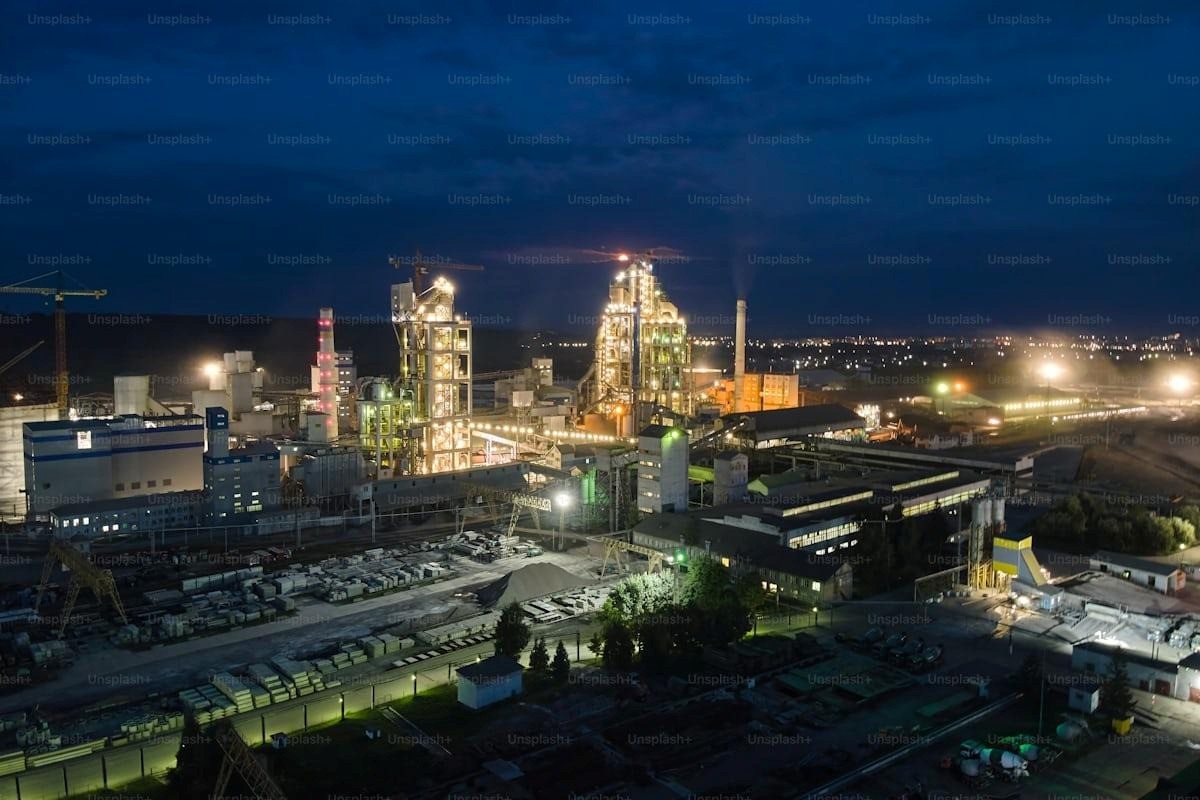
To grasp the opportunity, we must first appreciate the scale of what we've built. Our energy infrastructure is the circulatory system of the modern world a physical ecosystem for extracting, converting, transporting, and storing energy. It includes:
· Power Generation: Natural gas and coal-fired power plants.
· Extraction & Processing: Refineries and petrochemical complexes.
· Transportation: Extensive pipeline networks and marine LNG terminals.
· Storage: Massive geological caverns and petroleum tanks.
This network underpins all other industries. Without it, our current standard of living would be impossible.
The Stakes of the Transition
The energy sector is the bedrock of the global economy; clean energy alone accounted for 10% of global GDP growth in 2023 (IEA). Critically, in 2024, global electricity demand grew by 4.3%, outpacing global GDP growth of 3.2% (IEA). This underscores our deep dependence on the energy systems already in place. Simply decommissioning this infrastructure is not just wasteful. It is economically dangerous. It would strand trillions in assets and trigger severe global disruption, setting back human development. We can, however, achieve a dual objective: addressing climate change effectively without sacrificing economic output. It simply requires intelligent planning.
A Ready-Made Platform for a New Economy
Upon closer examination, our existing infrastructure shares a common engineering blueprint that is surprisingly adaptable. This network is not a liability; it is a monumental head start.
· Input/output Logistics: Pipelines, ports, and rail lines designed for bulk fluids and gases.
· Conversion Units: Reactors and turbines built for high-temperature, high-pressure processes.
· Storage & Distribution: Massive tanks and geological caverns for safe, large-scale storage.
This ready-made platform forces us to adopt a new, pragmatic criterion for evaluating future energy sources: compatibility with existing infrastructure, or "Integrability."
For decades, the primary metrics have been cost, scalability, and carbon footprint. To these, we must now add "Integrability." An energy source that can leverage our vast network of pipelines, storage, and plants has a significant strategic advantage over one that requires building an entirely new system from scratch. This principle is already shaping the energy landscape. Hydrogen and green ammonia are strong contenders not only because they are clean, but because they can, with modification, flow through pipelines and be stored in caverns built for natural gas. Similarly, Sustainable Aviation Fuels (SAF) are compelling because they can be integrated into existing refinery systems and global distribution networks.
The Repurposing Playbook: A Cleaner Future, Built on a Robust Past
We can preserve immense capital and accelerate the transition by converting legacy systems.
Here’s how:
· Natural Gas Power Plants: Can be retrofitted for hydrogen blends or integrated with Carbon Capture (CCUS), providing vital grid stability and decarbonised power a crucial need as the AI revolution drives a massive spike in electricity demand.
· Natural Gas Pipelines: Can be refurbished to transport clean hydrogen or captured CO₂, leveraging trillions in existing assets to build new energy networks. However, this is not without its challenges; transporting pure hydrogen, for instance, can cause embrittlement in certain pipeline steels, requiring careful material assessment and potentially new linings.
· Oil Refineries: Could be converted into bio-refineries processing waste into Sustainable Aviation Fuel (SAF), transforming fossil fuel hubs into circular bio-economy centres that turn agricultural waste, used cooking oil, and other biomass into valuable resources.
· LNG Import Terminals: Could be retrofitted to handle green ammonia, a hydrogen carrier, repurposing critical marine infrastructure for global clean energy trade.
· Natural Gas Storage Caverns: Can be used for large-scale hydrogen or compressed air energy storage (CAES), solving the critical challenge of long-duration renewable energy storage.
This isn't just theoretical. Real-world pilots are proving the concept. In Germany, the "H2ercules" project aims to create a 1,500 km hydrogen pipeline network by repurposing existing natural gas lines. In the United States, the Intermountain Power Agency in Utah is retrofitting a coal plant to run on green hydrogen, showcasing the transformation of generation assets.
Building the Bridge Forward
The challenges from aging assets and regulatory complexity to the scale of investment required are real. Overcoming them demands a coordinated effort:
· Globally, we need aligned standards for new energy carriers like hydrogen and collaborative R&D to ensure repurposing is feasible for all nations, not just the wealthiest.
· Governments must create stable policy frameworks that incentivize retrofitting over abandonment, streamline permitting, and support pilot projects.
· Industry Leaders must proactively invest in scaling these technologies and, just as importantly, retrain their workforce for the new energy landscape.
· For the next generation, this is the defining engineering and policy puzzle of our time. We need minds that can master both the fundamentals of thermodynamics and the principles of sustainable economics to bridge the old and the new.
The goal is not to cling to the past, but to build the future wisely. By repurposing the robust infrastructure we already have, we can construct a cleaner, more prosperous energy world without starting from scratch. The bridge is already there; we just need the collective will to cross it.