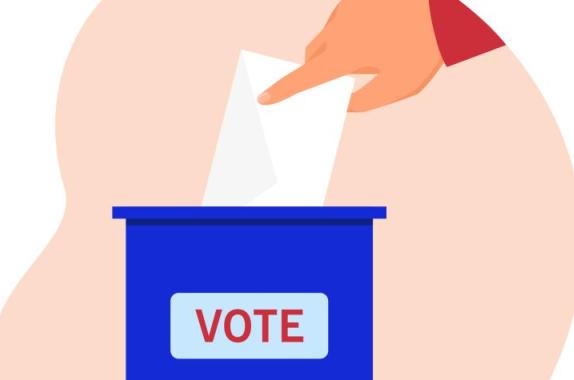
Election Commences for 2024 Board
. by Heather Yuengling
Voting by paper and electronic proxy ballot begins September 11 and ends October 16.

Voting by paper and electronic proxy ballot begins September 11 and ends October 16.
This module introduces students from Class 9th to 12th about the concept of Bioplastics. These are an alternative to traditional plastics. Firstly, bioplastics are considered to be generated from sustainable sources and secondly, they break down naturally, thus avoiding the damaging effect of disposal of plastics. Student will be able to make their own bioplastic which is economical and environment friendly in nature.
| Module details | |
|---|---|
| Topics | Biological Engineering, Bioproducts and Renewable Sources |
| Best-suited audience | Array |
| Interactive? | Yes |
| Approx. time requirement | 25 minutes |
| Approx. # of volunteers | 1 |
| Recommended audience size | Any size |
The purpose of this K-12 Module is to discuss water filtration and the challenges that arise from pollution/contamination. Students will learn about the various techniques to clean water, the factors that can influence available treatment options, and the barriers that determine who can get access to clean water.
The lecture portion of the module will cover the background and history of water purification, the contaminants in water, the overall water filtration process done by industrial companies, the different filtration methods used by companies, and the work that...
| Module details | |
|---|---|
| Topics | Process Design/Development |
| Best-suited audience | Array |
| Interactive? | Yes |
| Approx. time requirement | 60 minutes |
| Approx. # of volunteers | 5 |
| Recommended audience size | Any size |
In this combination demonstration-experiment, students practice engineering-style thinking by dividing an existing process into distinct steps, organizing those steps in sequence, and considering the logistical changes in scale, equipment, and factors unique to the product at hand. Then, they dive deeper into the concept of oxidation in food and how an engineer in the food industry might approach this challenge.
| Module details | |
|---|---|
| Topics | Biochemistry, Process Design/Development |
| Best-suited audience | Array |
| Interactive? | Yes |
| Approx. time requirement | 25 minutes |
| Approx. # of volunteers | 1 |
| Recommended audience size | Any size |
We teach students about different sources of power, including oil, solar, wind, and nuclear, and the various pros and cons of each as well as how they are used to generate power. Then, we create small catapults to demonstrate the conversion of energy from potential to kinetic.
| Module details | |
|---|---|
| Topics | Renewable Energy |
| Best-suited audience | Array |
| Interactive? | Yes |
| Approx. time requirement | 25 minutes |
| Approx. # of volunteers | 2 |
| Recommended audience size | Any size |
Students will utilize prebuilt heat exchangers or create their own and compare the heat transfer of the different exchangers
| Module details | |
|---|---|
| Topics | Heat Transfer, Thermodynamics, Transport Phenomena |
| Best-suited audience | Array |
| Approx. time requirement | 30 minutes |
| Approx. # of volunteers | 3-5 |
| Recommended audience size | 15-25 students |
The objective of our module is to teach young and aspiring students about the concept of the natural indicator. Our project also gives the students a visualization of changing color using turmeric as a natural indicator. Through our experiment, we visually confirm the change in color using turmeric when we add acid and base. Our module has a full-fledged presentation explaining how and when color change occurs with a proper demonstration for the optimal understanding of the students.
Basic knowledge of indicators helps students understand much broader concepts like...
| Module details | |
|---|---|
| Topics | Physical Chemistry |
| Best-suited audience | Array |
| Interactive? | Yes |
| Approx. time requirement | 2 minutes |
| Approx. # of volunteers | 4 |
| Recommended audience size | Any size |
Students will demonstrate the principles behind liquid-liquid extraction and salting-out. These two are very important chemical processes for extraction and purification of materials. With this module’s experiment, they will replicate these processes and visually understand how they really work.
...
| Module details | |
|---|---|
| Topics | Engineering, Mixing, Physical Chemistry, Separations |
| Best-suited audience | Array |
| Interactive? | Yes |
| Approx. time requirement | 15 minutes |
| Approx. # of volunteers | 2-3 |
| Recommended audience size | 10 students |
Students will learn about the molecular intricacies of milk such as its make-up of polar and nonpolar molecules. Next, students will discuss different types of machines used in the large-scale process of making ice cream in a factory. Finally, students will simulate this process by making their own ice cream. ...
| Module details | |
|---|---|
| Topics | Molecular Engineering |
| Best-suited audience | Array |
| Approx. time requirement | 30 minutes |
| Approx. # of volunteers | 1 |
| Recommended audience size | Any size |
The purpose of this module is to teach students about the fundamentals of food and product engineering. Students are encouraged to experiment with various flavors and colors in order to create an alginate boba to the correct specifications. Students are then able to further analyze their boba using an image analysis program that calculates boba diameter, eccentricity, and uniformity.
...
| Module details | |
|---|---|
| Topics | Biological Engineering, Data Analysis |
| Best-suited audience | Array |
| Interactive? | Yes |
| Approx. time requirement | 30 minutes |
| Approx. # of volunteers | 3-5 |
| Recommended audience size | 20-30 students |
